
How long do knee and hip replacements last?
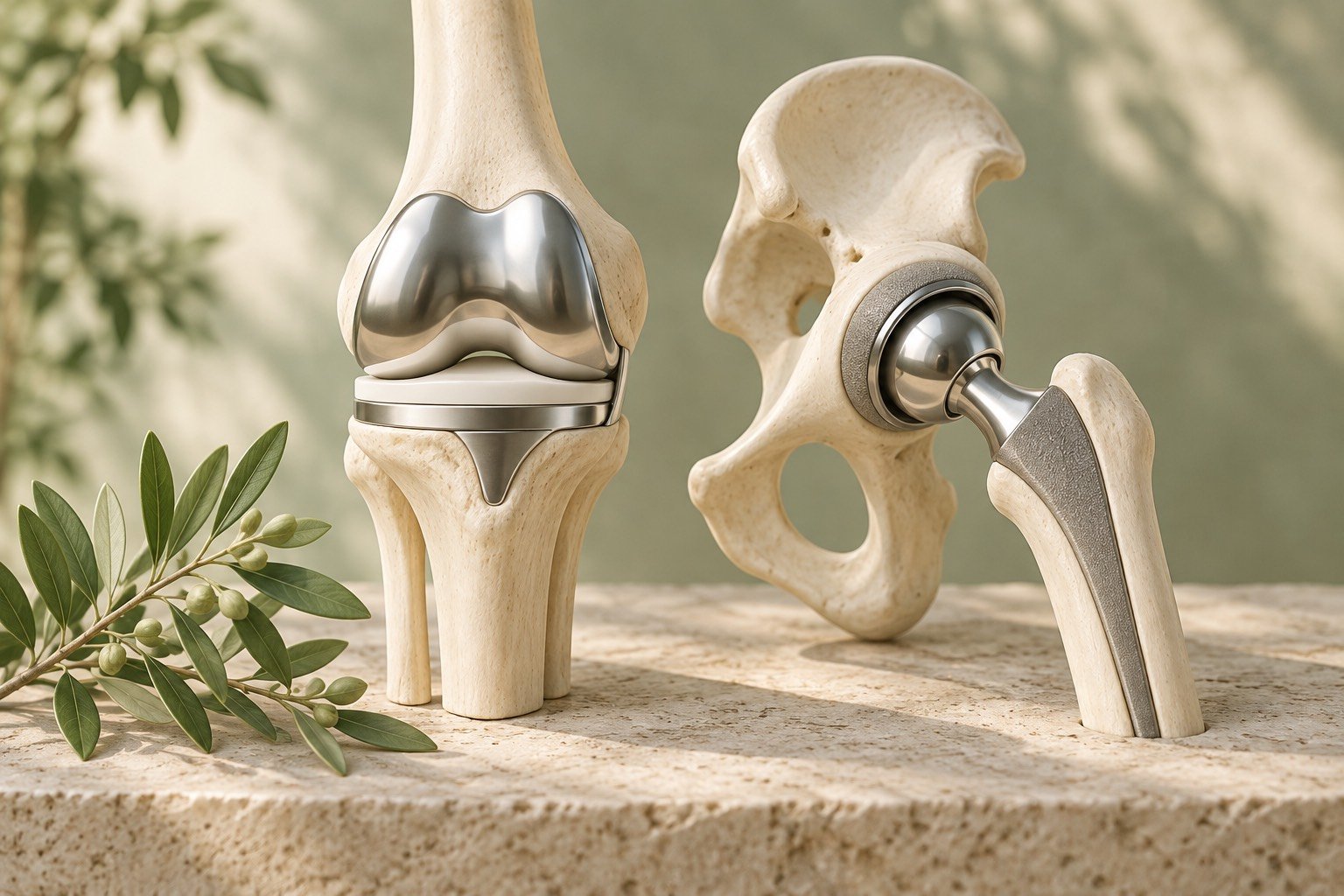
AI-generated illustration. This is not a real patient or a diagnostic image.
The same lifespan cannot be predicted for every joint replacement. Implant features, age, activity, bone structure and problems such as infection affect the outcome. Some replacements work well for many years; others need intervention sooner.
What do research percentages mean?
Systematic reviews published in 2019 found that, based on national registry data, approximately 82% of total knee replacements and 58% of total hip replacements had not required revision at 25 years. These are pooled results from historical implant and patient groups, not a certain prediction of an individual's future when undergoing surgery today.
“Survival” here means the implant remains in place without revision. It is not the same measure as complete freedom from pain or unrestricted movement. This distinction matters when interpreting results.
Why does follow-up continue?
New pain, loss of movement or changes in walking need investigation. Regular reviews assess problems such as wear and loosening. Discussing personal risks and expected use openly is more appropriate than promising that a replacement after a certain age will certainly last for life.
Sources
This article provides general information. Individual diagnosis and treatment require a clinical assessment.