
Is MRI always the best test for knee pain?
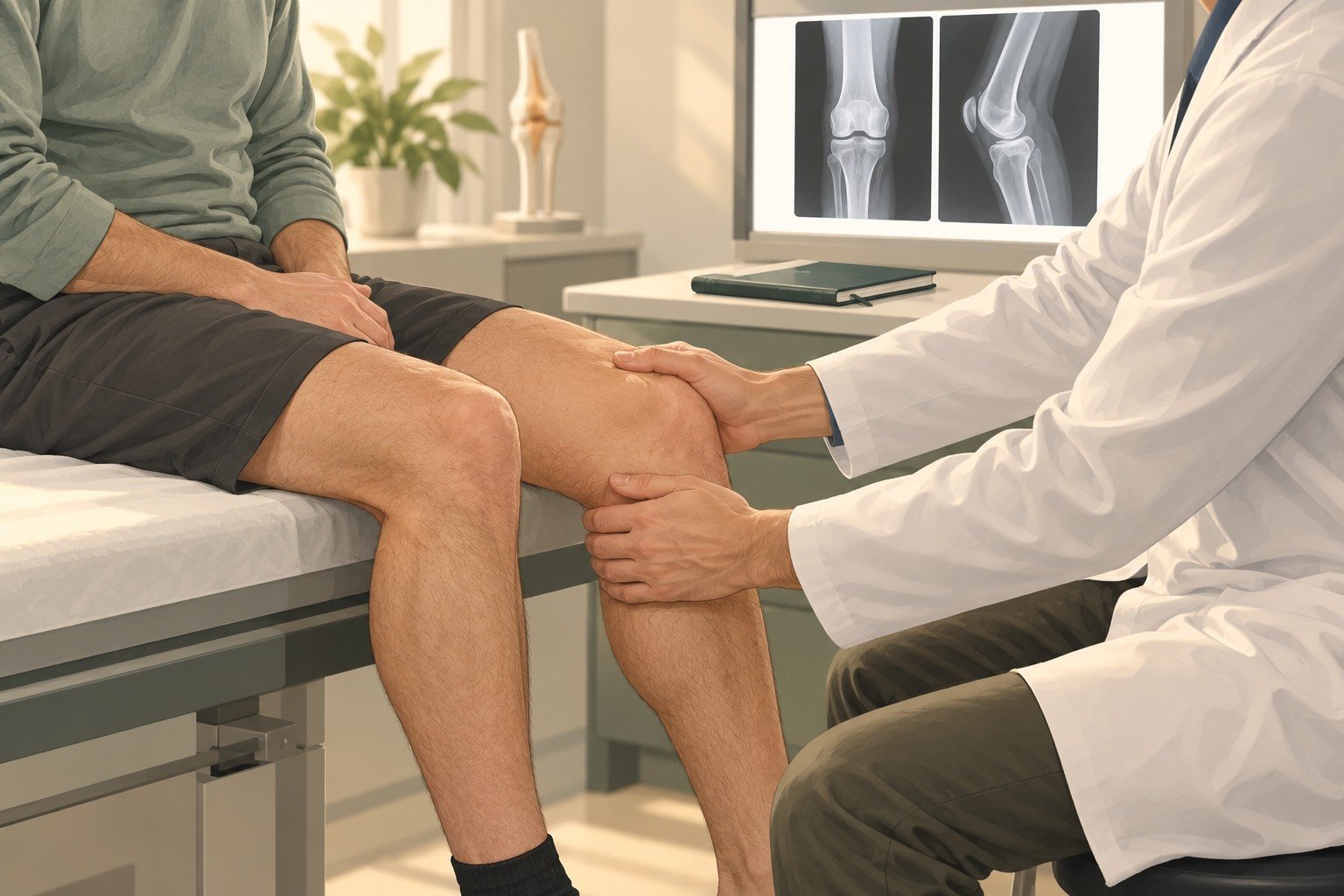
AI-generated illustration. This is not a real patient or a diagnostic image.
A test's ability to provide detailed images does not mean it should always be the first choice. For knee pain, the most useful starting point is listening to how symptoms began and examining the knee.
When is an X-ray useful, and when is MRI?
In some patients with suspected osteoarthritis, standing weight-bearing X-rays can help assess joint space and alignment. Routine imaging is not always required for diagnosis in people with typical osteoarthritis features.
MRI may be considered for suspected ligament or meniscal injury after a new injury, unexplained symptoms or specific questions that would change treatment. The necessary method depends on the clinical situation.
Does every reported finding cause pain?
No. Age-related or asymptomatic changes may also appear. Meniscal findings in particular can occur in people without pain. Planning treatment from the report alone can mislead if imaging, examination and symptoms do not agree.
A requested test should answer “What question will this resolve, and how will the result change treatment?” Assessment should not be delayed for a hot, swollen knee with fever or inability to bear weight after an injury.
Sources
This article provides general information. Individual diagnosis and treatment require a clinical assessment.